History of Adult Education in Malahide Community School
| LOOKING BACK OVER FIFTY YEARS.
Over the past fifty years Malahide Community School has successfully introduced, maintained and promoted a programme of Adult Education in the community. The success of that operation is testimony to a genuine communal spirit that has embraced the school management, tutors, caretakers and the all-important public. As we look forward to the first full academic year in our new school it seems appropriate to pause and reflect and chart our progress over that time. The first programme of Adult Education was launched in 1976 with the opening of the Community School. Sr. Mary Peter, who had been in Scoil Iosa since 1963, organised the programme for the first five years. By September 1978 there were nine courses on offer on Tuesday nights, namely, Art, Car Maintenance, Dressmaking, Flower Arranging, French, Fruit and Vegetable Gardening, Changes in the Church, Yoga and Wood Carving. Thursday nights were up and running then, too, with Crafts, Christmas Cookery, Garden Decoration, Pottery, Relating with your Children, Typewriting and Woodwork. The fee for ten weeks was £10 or £6 depending, presumably, on purchase of raw materials. In 1981 the position of Adult Education Director became a post of responsibility and Bill McCartney, who later went on to become Principal of St. Fintan’s in Sutton, took over from Sr. Mary Peter. By 1982 thirty seven courses were offered, divided into five categories under the headings: Leisure Time and Hobby Activities, Useful and Educational Courses, Language Courses, Health and Fitness , Morning Classes for Housewives(!) Women’s Liberation was clearly in its infancy in this area at that time. Music enjoyed a big push that year with courses on Musical Appreciation, Playing Recorder, and Guitar on offer. The tutor of Musical Appreciation, Mary Killen, remembers an enterprising move of location that year. A general consensus emerged that beautiful music and the cold ,grim surroundings of the old Junior Block were not complementary. It was agreed that classes for the second term would take place in participants’ homes on a rotation basis. Refreshments were strictly confined to tea and biscuits. One of the most popular courses during the early eighties was Coastal Navigation, taught by Paddy O’Neill. It offered an approved Certificate in Navigation. Our increased interest in Europe, since joining the EC in 1973, was evident. In 1982 French was offered at three different levels while German and Spanish had beginners and advanced classes. Another indication of a changing society was the introduction that year of the course Self-Defence for Ladies, summed up in the brochure with the clinical phrase ‘based on the Karate method’. By that time a demand for information technology had emerged and a course on basic programming was taught by John Molloy. Inflation was making its mark back then, too, with course fees running at a standard £18 per term. Leaving Certificate courses for those who needed a second chance were available in English, Irish, Maths, French and Spanish. Bill McCartney recalls that Bridge, Flower-Arranging, Cookery Demonstration, Pottery, Art, Woodcarving, Car Maintenance, Gardening and Upholstery were hugely popular in the 1980’s. The enduring popularity of Upholstery is demonstrated by the fact that the tutor, Terry Quinn, taught his first course in 1983 and is still there to this very day. One advertised course of 1983 that would nowadays not go to print was Gerry McFadden’s Maths for Mums with its sub-text: ‘An introduction to the mysteries of new mathematics for mums’. Even then it must have raised eyebrows because in 1984 the title was amended to Maths for Parents with no sub-text. Mary Killen(then Harrington) took over as Director of Adult Education in September 1984, a position she filled for the next five years. By then the Keep-Fit classes were established and took place in Social Area 2, conducted by Frank Hearns. Each session was preceded by a warm-up exercise of 10-15 laps of the four corridors, alternating jogging with sprinting. Mary recalls that the students and tutors of other classes made a point of not being on the corridors at those times! Computer vocabulary had not imposed itself then because the brochure for 1986 contained the course Typewriting, taught by Elizabeth Whelan. Public Speaking (Paddy Coyle) and Spoken Irish (Micheal MacAthlaoich) were established favourites by the second half of the decade. One intriguing choice offered on the 1986 programme was Beer-making or Electronics by Walter Hemmens, suggesting that there was more than one way for students to get lit up. By the close of Mary’s tenure in 1990 the title ‘Adult Education’ had changed to ‘Community Education’ and the programme was expanded to include Furniture Restoration, Photography, Literary Appreciation, and a decidedly philosophical Reflections and Reactions to Change in Modern Society. On a more personal note Mary discovered that Musical Appreciation and Woodcarving had something more elemental in common than artistic flair because she met Michael Killen in 1986 and they were married the following year. Michael went on to become our longest-serving tutor so far, covering the period 1976 to 2003. The growth and success of the Community Education Programme can be measured by the fact that two people, Tony Brady and Patricia McDonagh, took over the running of the operation in September 1990. They were joined in 1991 by Robbie Harrold, in 1992 by Michael MacAthlaoich and by Denis Finn the following year. Tony became Year Head and Coordinator of the Transition Year in 1992.In 1993 there were forty four courses on offer and morning classes were available from Monday to Thursday inclusive. Change was very much the keynote of the 1990’s. The enrolment form no longer asked for a participant’s date of birth, occupation or title of Mr., Mrs. or Miss! We had become more conscious of human rights, too, highlighting the fact that the night school was accessible to wheelchairs and offering a course in Sign Language by the Sign Language Tutors Association. The phrase Word Processing had supplanted Typewriting and health education had extended its range to embrace Aerobics, Shiatsu and Yoga. The tutor of Yoga, Helena Podesta, is still with us. Golf, under the professional tuition of Arnold O’Connor, became firmly established and remains hugely popular. Our changing society was reflected in extending the Self Defence course to include men and the introduction of Stress Management, a Malahide Happy Heart Project. If women’s liberation was confined to a few faltering steps in the 1980’s it was now striding purposefully with a course called Becoming Your Own Woman taught by Margie Flynn. The growth of Wine and Wine Tasting reflected a cultural shift away from traditional drinking habits. Fine Arts were well presented by Watercolour Painting, Pencil Sketching, Silk Painting and Stain Glass for Beginners. Inflation retained its muscle with course prices ranging from £30 to £35 with one notable exception being a Civil Defence course in rescue and first aid provided free of charge by Malahide Rescue. In 1994 the formation of a new Adult Choir under the direction of Marion Doherty was announced. That year, too, saw the introduction of a two-year Diploma Course in Management and Industrial Relations, conducted by the National College of Industrial Relations. It proved to be an instant success with an enrolment of between forty to fifty students. On a more serious note some very important developments have taken place since the turn of the new century. One of these is the course in Local History, taught by Joe Byrne under the auspices of NUI Maynooth. Successful students are awarded the NUI Certificate in Local History which carries credits towards the BA in Local and Community Studies. Another significant provision is the Back to Education Initiative(BTEI). This is designed to make learning opportunities accessible to people who left school with little or no formal qualification. The courses on offer include: Introduction to Computers, Local History, Play and the Developing Child, and Management and Employee Relations and are free of charge. Independent of this initiative we offer classes in Literacy, including Reading, Writing, Numeracy, Spelling and Basic Computers, also free of charge. Like the previous decades, the demand for subjects has been a reflection of trends in the wider society. We are now operating on Monday, Tuesday, Wednesday and Thursday evenings. The acquisition of holiday homes is a factor in the continued popularity of continental languages, most notably Spanish which has four separate classes running each week. The impact of information technology on our lives is demonstrated with Computers also having four classes. We also provide English Language Classes for Foreign Nationals at beginner and intermediate levels. A novel addition to our programme has been the introduction of Belly Dancing in 2003 which sparked the amusing enquiry from a prospective participant who wanted to know if a large stomach was a pre-requisite for joining the class.
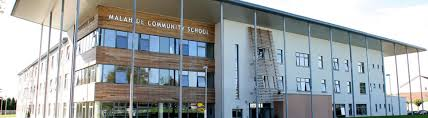
In 1997 Patricia McDonagh moved to the post of Deputy Principal. Robbie Harold has been our Director since 2000 and has more recently been elected to the prestigious position of Chairman of the National Association of Adult and Community Education Directors. The continued expansion of our department is demonstrated by the fact that since 2001 Aisling Cadden, Mary Rose Sweeney, Declan Donnelly, Frank Cleary and David Aston have joined our department. By 2006 Adult Education was now employing over 50 tutors offering over 60 courses in both our Spring and Autumn terms. In February 2007 our new school was formally opened by Minister Mary Hanifin and the Adult Education benefits from the new facilities available The courses on offer in 2010 reflect trends in society with computers, languages, arts and many health courses being offered even with the country in recession. Adult Education continues to offer both hobby and accredited courses during the economic downturn. In 2016 we celebrated 40 years of serving the community with both Spring and Autumn Adult Education Programme terms. In 2018 Declan Donnelly launches a new website www.malahidecsadulted.ie specifically for the Adult Education programme in Malahide Community School making it easier for students to read about courses on offer and to enrol online. In November 2020 Robbie Harold retired having made an enormous contribution to both Adult Education in Malahide Community School and to Adult Education in Ireland as Chairperson of (NACED) National Association of Community and Educational Directors. Declan Donnelly took over as the new Director of Adult Education in November 2020. He helped steer the Adult Education programme through the lean Covid years and together with his Adult Ed team rebuilt the programme to offer over 90 courses by 2025. He introduced the new brochure design that we have today. QQI courses are reintroduced and with the help of his new team member Anne Cuddihy they together have introduced QQI SNA QQI Level 5 &6, Care Skills QQI Level 5, Care of the Older Person QQI Level 5 and Child Psychology QQI Level 6. The Arts & Crafts courses have really flourished including Crochet, Embroidery, Knitting, Sewing, Sculpture -Make a Mould Cast and Macrame. We have continued to expand courses on offer like Chess, Cake decorating, Flower Arranging, Cycling programme, Home DIY, Hiking Skills Cookery for Men to name a few Other key members of the current team who play a key part in the successful running of the Adult Education programme include Caroline O’Brien who is the Adult Education secretary and Martin Brennan who is the Adult Education night time caretaker. We are grateful to our school principals, Sr. Kathleen Day, Mr. Martin Towey, and Mr. Brian Cannon, Mr. Molloy, Ms. McDonagh and Mr. David Hayes who have presided over our operation down the years. We would also like to offer our sincere thanks and appreciation to the Board of Management, senior management team and the teachers of the teaching staff of the day school for their collegiality and support throughout the years. Special thanks, too, to our caretakers including Pat Hickey, who was with us from 1976 and sadly passed away in 2023, Christy Flynn, George Seidner, Pedro Farrell and Brian Mulligan who joined us more recently and Martin Brennan our nighttime caretaker, In previous years we also enlisted the help of Michelle Butler, Deirdre Lynott, Nicole McGuire, Carol Harrold and Tara McCarthy who both sadly passed in 2022 to help in the Adult Education office during the busy September and January periods whilst the adult education officers were engaged in teaching. Michele, Deirdre and Tara went on to work in the main school office. Thanks also to Jean Jones and the current secretarial staff Michelle Cahill and Caroline Campbell in the main school office for their ongoing support of the operation of the Adult Education programme. Finally, this little article is a tribute to everyone who has traversed and enriched the landscape of Adult Education in our school.
|